
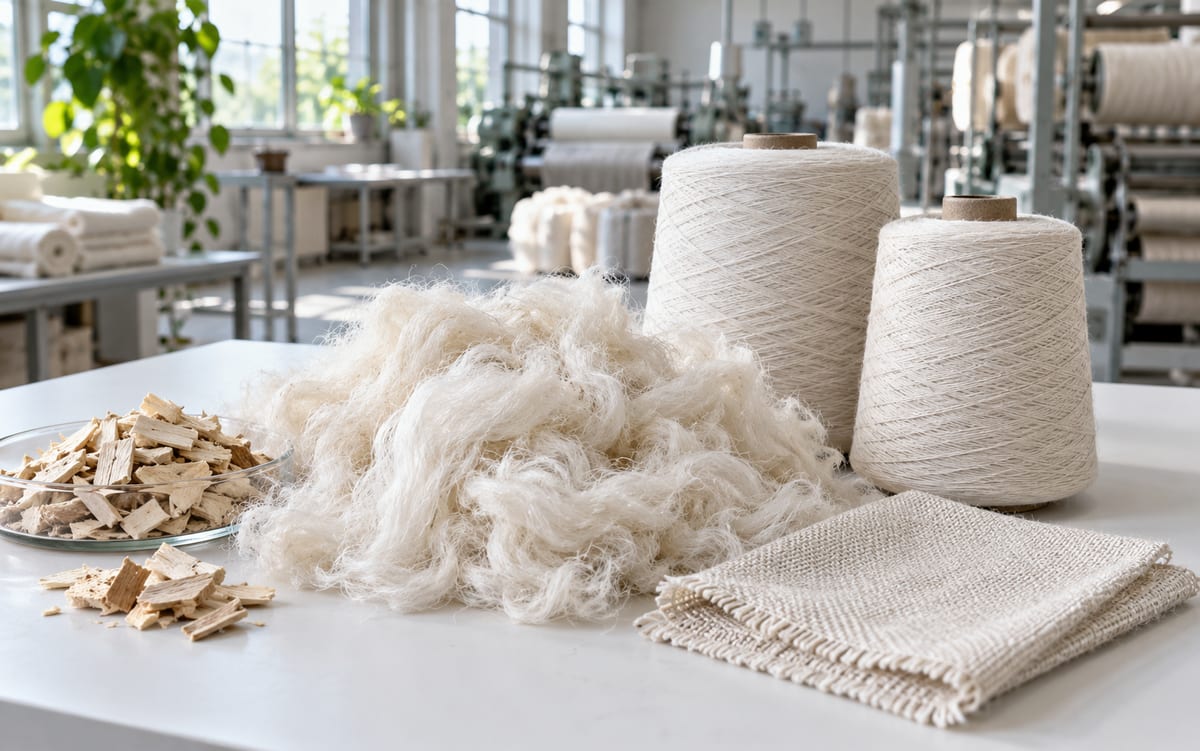
 AI示意图
AI示意图AI示意图,非新闻现场或商品实拍。
While most viscose mills are still haggling over price per tonne, a rating list from an international environmental NGO has quietly become the gatekeeper to the global brand sourcing table. In Canopy's 2026 Button Ranking update, three Chinese viscose producers once again received the top-tier 'dark green shirt' rating—for the fifth consecutive year. That number is not a trophy; it is a rising market-access threshold.
Why the rating matters more than an order
The Canopy Button Ranking, published by an international non-profit, assesses fiber sourcing for forest-material risk, chemical management and recycled feedstock use. It is used by numerous brands, retailers and designers as a supply-chain screening tool. In practice, the result determines whether a mill can enter a brand's supplier list.
A 'dark green shirt' signals a high standard of sustainable supply chain. For viscose producers, it means two things: raw materials cannot come from high-risk wood pulp sources, and chemical management must withstand third-party audits. Industry data shows that global brand requirements for viscose are shifting from optional to default—mills without a rating can be filtered out at the quotation stage.
Three players, three different strengths
Jilin Chemical Fiber scored on chemical management, earning an industry-high 8.0 and a 'dark green flask' recognition. Its rayon division has launched green fiber brands including JIRECELL, REBOOCEL and ECOBAMBOO, expanded next-generation pulp use, adopted green electricity and energy recovery, and passed 18 certifications including EU-BAT and OEKO-STeP. Crucially, the rating has brought it into the supply chains of 550 domestic and international brands—green investment converted into quantifiable customer assets.
Tangshan Sanyou Chemical Fiber has annual capacity of 830,000 tonnes, covering viscose staple, modal and lyocell among over 100 varieties. Since partnering with Canopy in 2015, it has completed its fourth CanopyStyle audit, with raw material sources rated 'NK' (no high risk). Its recycled fiber capacity reaches 40,000 tonnes per year, and its ReVisco recycled fiber covers all three generations of cellulose fiber. For buyers, this multi-product plus recycled capacity combination allows switching from conventional to recycled within one supplier.
Xinxiang Chemical Fiber holds an LR low-risk raw material rating and takes a different path: embedding sustainable procurement into supply-chain management and iterating green products such as juncao fiber, BaiLu-Eco and Reisel fiber. The juncao route relies less on forestry resources than wood pulp, a differentiated upstream bet among Chinese producers.
Green barriers are rewriting export logic
Seen together, the three companies reveal a common trend: green ratings are no longer a public-relations matter but an intersection of procurement, production and export. For pulp suppliers, high-risk sources are being systematically excluded. For mills, green electricity, energy recovery and full chemical control are becoming fixed costs. For traders, sustainability questionnaires attached to inquiries will only get longer.
This explains why the Canopy ranking continues to shape order flows. Brands must prove fiber sourcing compliance to consumers and regulators, and the rating offers a ready-made filter. Five consecutive years at the top tier shows that in the viscose segment, leading Chinese producers have globally competitive green management. But ratings are dynamic: any slip in sourcing, chemical data or recycled capacity can affect the next round.
For smaller mills and traders, hitting the top rating immediately may be unrealistic, but solid raw-material traceability and chemical inventories are achievable. Green barriers usually transmit from brands to tier-one suppliers, then to tier-two, and finally to pulp and chemical inputs. The earlier a traceability system is built, the less likely a company is to be screened out next time.