
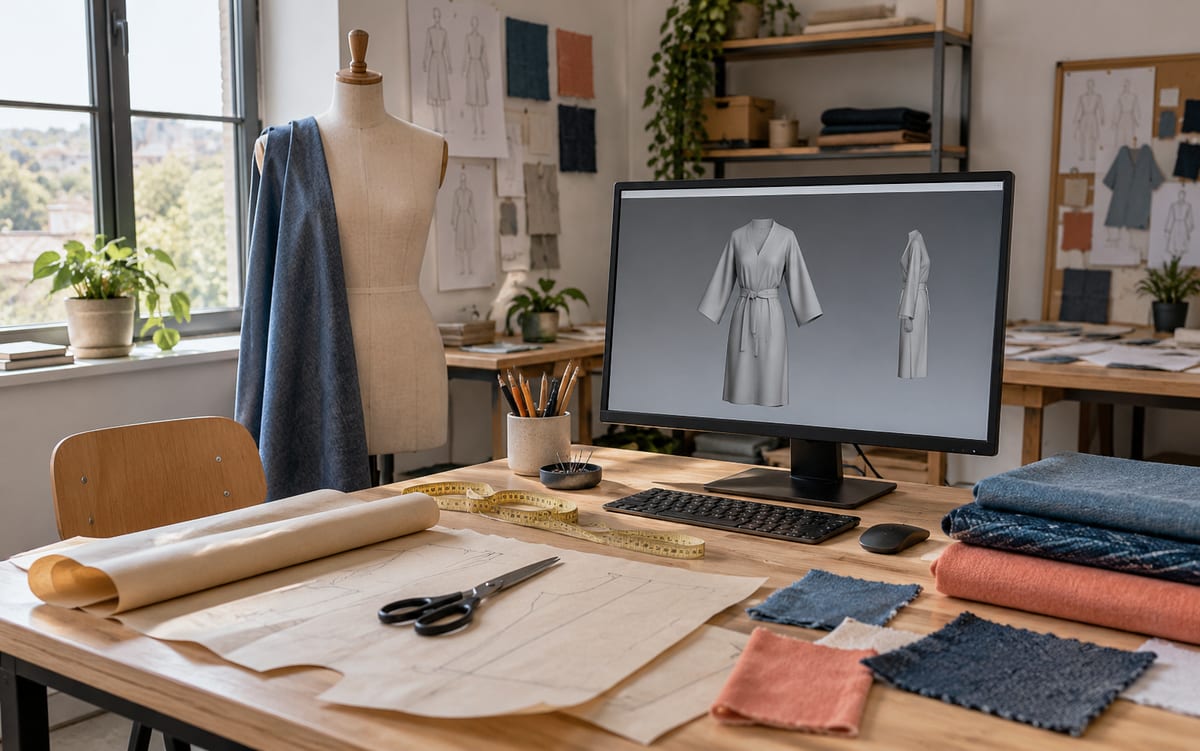
 AI示意图
AI示意图AI示意图,非新闻现场或商品实拍。
The logic of talent output from fashion colleges is being redefined. The first plenary meeting of the 2026-2030 Fashion Sub-Committee under the Ministry of Education's Textile Teaching Advisory Board was held in Hangzhou. The phrase "digital-intelligent era" in the meeting title is not rhetorical—it signals that curriculum systems, faculty evaluation, and industry-education alignment will all be rearranged around digitalization and intelligence. For the industry, this is not an internal education meeting but an early signal of structural shifts in talent supply over the next three to five years.
The Hangzhou Model: Industry Ecosystem Forces a New Education Approach
Hangzhou was chosen for clear industrial reasons. Zhejiang Sci-Tech University revealed that Hangzhou, building on its silk heritage, has formed a complete apparel ecosystem covering design, R&D, smart manufacturing, branding, e-commerce, and talent cultivation. This means local fashion programs are naturally embedded in a closed-loop scenario from fabric to end brands.
The completeness of this ecosystem is precisely what most fashion education lacks. Most institutions still rely on classroom teaching and simulated projects, with limited exposure to real supply chains. Hangzhou's value lies in the density of industrial links, which compresses physical distance and collaboration costs between schools and enterprises. For buyers and brands, this means future design and technical talent from Hangzhou will likely have a stronger understanding of supply chain responsiveness than those from traditional training paths.
Accreditation and AI: Two Parallel Reform Lines
The first hard signal is engineering education accreditation. The Textile Teaching Advisory Board interpreted new accreditation standards and suggested making accreditation a key task for the Fashion Sub-Committee. The core of engineering accreditation is outcome-based education and continuous improvement. Once extended to Fashion Design and Engineering programs, curriculum, graduation requirements, and faculty capabilities will be subject to standardized assessment.
For factories and exporters, the direct impact is that future graduates' competency descriptions will be more quantifiable and benchmarkable. Recruitment teams can more clearly judge whether candidates possess engineering thinking and practical problem-solving skills, rather than relying solely on portfolio impressions.
The second signal is that AI integration into fashion education has moved from discussion to operation. Group discussions explicitly focused on AI and fashion education, interdisciplinary development, and talent cultivation reform, with entrepreneur representatives participating in curriculum optimization and practical training system design. This indicates AI is no longer a elective add-on but a variable entering core curriculum structures.
The Boundary Between Design and Engineering Is Blurring
The meeting also included planning sharing from the Design Teaching Advisory Board. The joint exchange between design and engineering committees is itself a noteworthy structural change. Traditionally, Fashion Design and Engineering and Fashion and Apparel Design have distinct training paths—one technical, one creative.
But industry demand in the digital-intelligent era is breaking this dichotomy. Smart pattern-making, 3D sampling, digital fabric libraries, and AI-assisted design require practitioners to possess both aesthetic judgment and technical operation skills. The "pain points in program development" and "difficulties in talent cultivation" discussed in groups essentially reflect the teaching pressure brought by this competency hybridization.
For industrial clusters, regions like Keqiao, Shengze, and Nantong may find future graduates have more cross-disciplinary skill tags. This poses new requirements for job design and internal training systems—recruitment for single-skill positions will become harder, while supply for hybrid roles will gradually improve.
Industry-Education Integration Moves from Slogans to Observation Mechanisms
The meeting arranged observation of industry-education integration outcomes and field visits to industrial bases. This format change deserves attention: integration previously stayed at agreement signing and internship base labeling, but observation and visits mean evaluation mechanisms are now involved.
When outcomes are displayed and compared, competition shifts from "having partner enterprises" to "what has been produced." This is an opportunity window for enterprises—factories and brands with real projects and technological iteration needs are more likely to gain R&D and talent resource preference.
From a price expectation perspective, talent supply structure adjustments typically lag industry changes by two to three years. The current systematic push toward digital-intelligent fashion education is expected to release noticeable impact on the industry around 2028. By then, graduates with digital tool capabilities and supply chain awareness will enter the market, creating gentle but sustained pressure on existing practitioners' skill upgrading.