
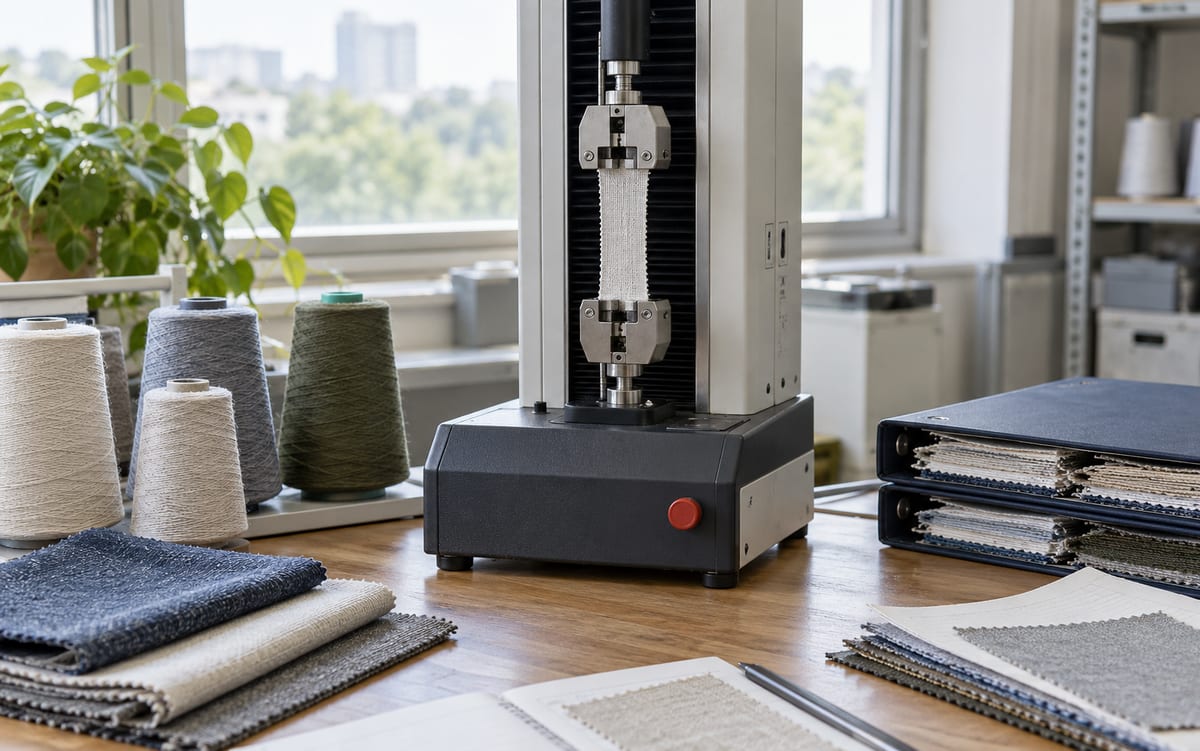
 AI示意图
AI示意图AI示意图,非新闻现场或商品实拍。
The textile industry generates a substantial volume of research outcomes every year, yet the share that actually reaches scaled production and stable downstream procurement is likely far lower than outsiders assume. The 13th China Top Ten Textile Science and Technology Achievements call is now open, with submissions accepted until October 31, 2026. That unusually long window signals one thing: the organizers are not chasing short-term hype but verified, commercialization-ready results.
Commercialization Signals Behind the Entry Criteria
The scope covers fibers, yarns, fabrics, apparel, home textiles, industrial textiles, textile machinery, dyeing and auxiliaries, essentially sweeping the entire chain from raw materials to finished products. The review lens, therefore, is not a single-point technical breakthrough but whether a result can find a receiving position along the chain.
More telling are the eligibility conditions. Achievements must have a commercialization basis, relatively high conversion maturity, and have generated significant economic, social or ecological benefits over the past two years, while holding clear independent intellectual property rights. Stacked together, these requirements effectively shut out laboratory-stage projects. For research institutes, papers and patents alone are not enough; real application scale and verifiable performance data are required.
Each entity may submit no more than two achievements. This cap sends a clear message: rather than casting a wide net, focus on polishing the most promising results. For SMEs, this means submission strategy needs to be tighter, with materials centered on differentiated advantages and landing evidence.
The Conversion Logic Behind the Release Mechanism
The event will ultimately designate ten winners and ten finalists, twenty in total. The tight number indicates a demanding selection process. The announcement is scheduled alongside the 2026 China Textile Science and Technology Achievement Matchmaking and the 13th release event, placing evaluation and matchmaking in the same setting, which is fundamentally different from a pure awards ceremony.
Support comes in three lines: supply-demand matchmaking, promotional display, and landing support. The landing support explicitly mentions assisting connections with industrial cluster regions, offering support in industrial landing, application and financial services for achievements that meet local policy requirements. This is arguably the most valuable element for applicants, because the hardest part of textile tech commercialization is often not the technology itself but finding a willing industrial belt and supporting capital.
From a cluster perspective, Keqiao, Shengze, Nantong and Jinjiang each have distinct strengths. Chemical fiber and weaving achievements find downstream support more easily in Shengze and Keqiao, home textile results fit Nantong's ecosystem better, and industrial textiles and footwear-related results are better received in Jinjiang. Whether a result lands depends heavily on whether the applicant has thought through the target cluster in advance.
Impact on Applicants and Buyers
For textile enterprises, the real value of this call is not just honor. Shortlisted and winning achievements are promoted through on-site exhibitions, compilations and public technology transfer service platforms, amounting to industry-level exposure and endorsement. For small and medium factories seeking technology upgrade paths, these lists also serve as a window into the industry's technology supply.
For buyers, recognized achievements represent a set of technology solutions that have passed review and possess commercialization validation. In fabric procurement, yarn selection and dyeing process upgrades, referencing these results helps reduce technology assessment costs. However, the applicable scope and commercialization conditions vary, so direct copying is not advisable.
In terms of timing, the October 31, 2026 deadline gives applicants ample preparation time. Given that materials require official seals, PDF compilation and orderly arrangement per the checklist, it is advisable to start internal material sorting at least a month in advance to avoid delays in sealing and scanning near the deadline.